
Henry County Criminal History Checks
No single Henry County search contains every police report, booking, court filing, warrant, and statewide disposition. Define the question first. Current custody belongs in HCSO Inmate Inquiry. Filed felonies belong with Superior Court, county misdemeanors may be in State Court, and city citations remain with municipal courts. A statewide identity-linked self-review belongs with GCIC or an authorized law-enforcement product.
Gather the full name, spelling variants, approximate birth date, arrest or filing date, and any booking, subject, case, SID, or OTN number lawfully available. Common names create false matches. Compare more than a name, and never infer that an empty portal proves no record exists.
- Choose custody, court, police-report, or statewide history as the actual target.
- Search the official portal with the narrowest reliable identifiers.
- Record the complete case, booking, or subject number from a likely match.
- Follow that identifier to the creating agency and compare charges with the final disposition.
- Request a certified court copy or official identity-based record when informal results are not enough.
Henry County Record Custodians
The Henry County Police Department creates reports for unincorporated incidents. City police create city narratives. HCSO creates jail bookings and sheriff incident records. The proper clerk preserves filed court cases. GCIC receives reportable fingerprint-supported arrests and dispositions, GDC covers state custody, and DCS covers felony probation and parole supervision.
This chain explains why one search cannot be complete. Request the police narrative from the arresting agency, the booking sheet from HCSO, and the certified result from the court. Preserve each system number so staff can connect records without relying on a common name.
Superior Court hears Henry County felony prosecutions in the Flint Judicial Circuit. State Court handles county misdemeanors and much traffic work, while Magistrate Court handles warrants and assigned early proceedings. Municipal courts keep qualifying city cases. A citation that began in Stockbridge, McDonough, or Locust Grove should not be redirected to the felony search merely because the city lies inside Henry County. Start with the issuing court shown on the citation or docket notice.
The official HCSO homepage collects sheriff service links.

Those links lead to sheriff-created information, not a substitute for a clerk-certified disposition.
Official Background Checks in Georgia
The Georgia Bureau of Investigation operates the Georgia Crime Information Center, the central repository. For self-review, GBI says people can obtain a Georgia history from most sheriff or police departments, subject to identity, consent, fingerprint, and fee rules. HCSO provides local checks in person and publishes 770-288-7133 for fingerprint and background services.
Georgia Felon Search has published a $15 search price and another $15 charge for each opened possible record, but users should confirm current pricing at checkout. It omits misdemeanors, juvenile and restricted data, arrests without a reported felony conviction, dropped or downgraded charges, and successful First Offender matters. It is not fingerprint identification.
GBI's criminal-history FAQ explains access and correction.
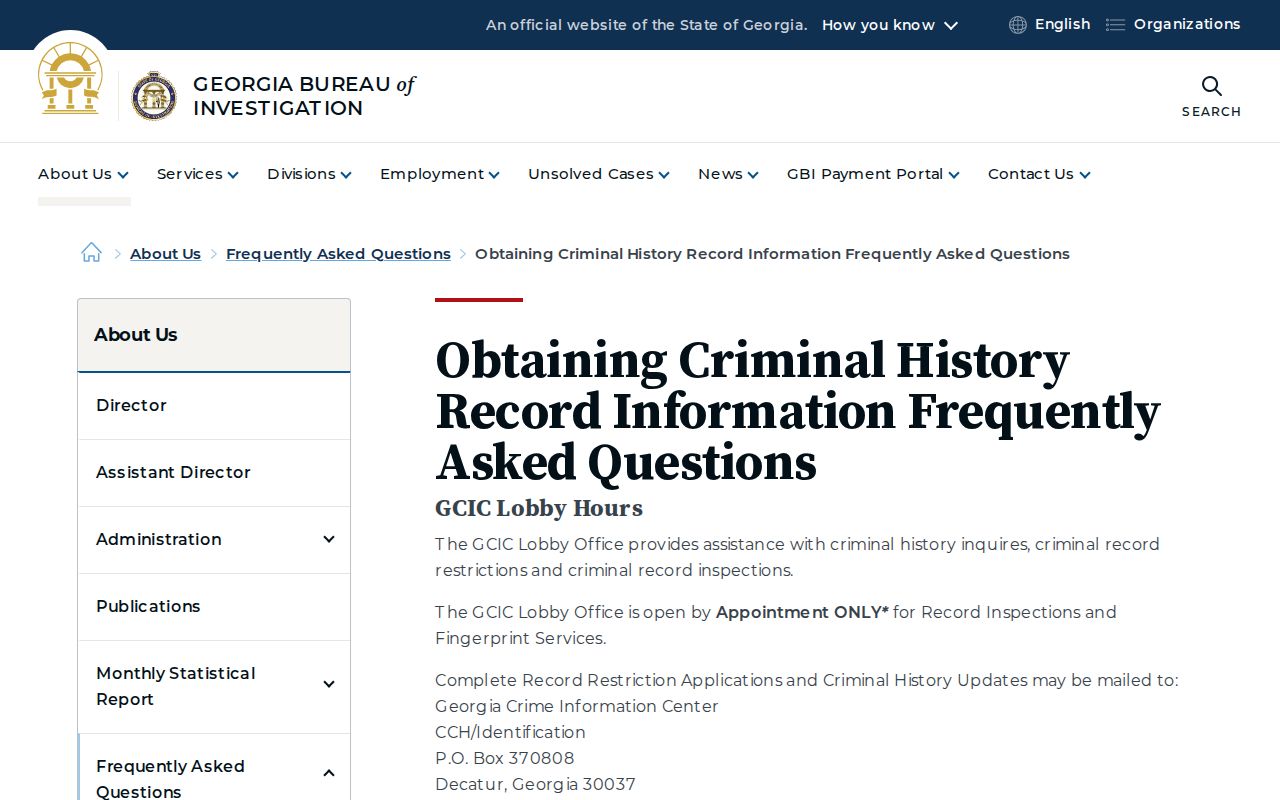
The state guidance distinguishes a name result from an identity-verified record.
Fingerprints Improve Henry Identity Matches
GAPS, operated through IDEMIA, handles authorized Georgia fingerprint submissions. A person registers with the required service code, schedules capture, presents valid photo identification, and submits prints. Results normally reach the authorized agency within 24 to 48 hours. The current Henry County capture site, hours, and fee were not confirmed, so verify them while scheduling.
Fingerprints are stronger than a name search because names, dates, and aliases can overlap. The FBI Identity History Summary is a separate subject-only federal product. Neither a federal nor state history replaces a certified Henry County judgment when exact disposition wording matters.
The official GAPS appointment channel provides current steps.
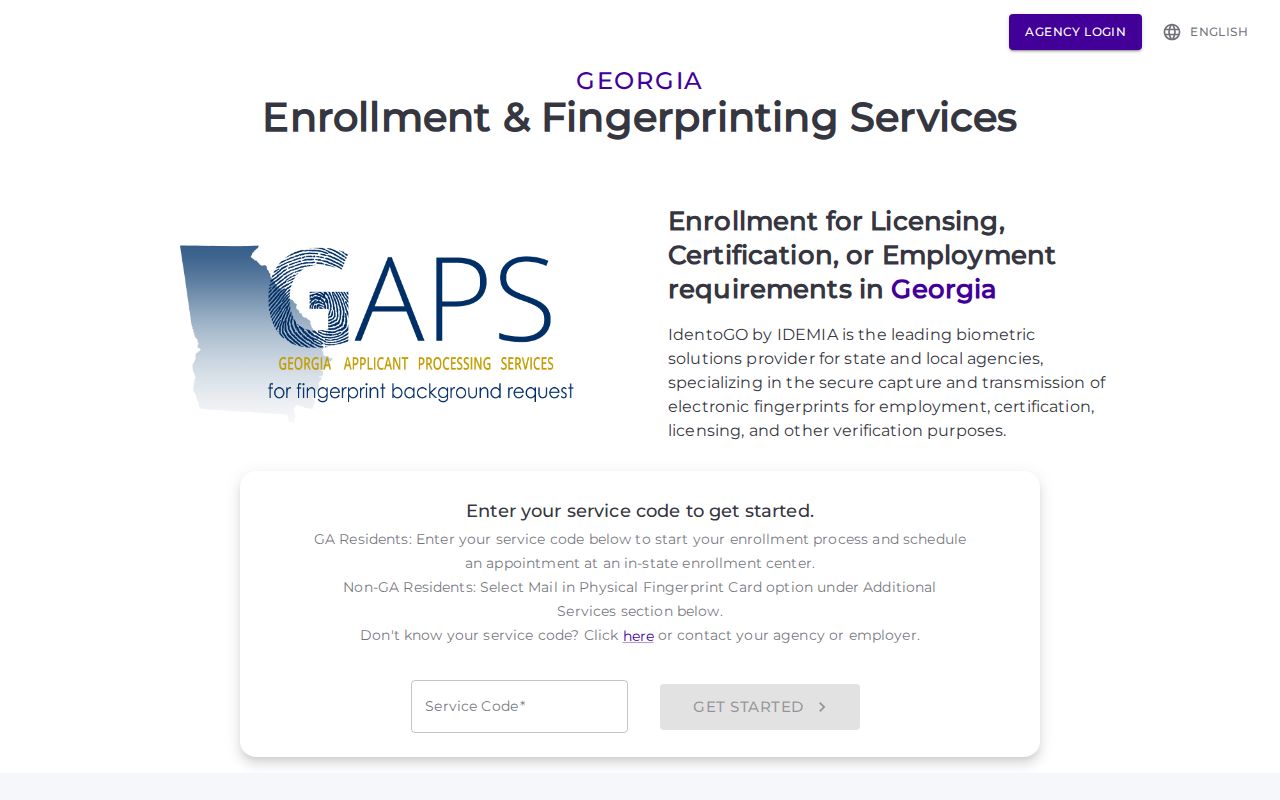
Use the service code supplied by the authorized process rather than choosing one by guess.
Kinds of Criminal Records
Henry County records describe different stages. An incident report states alleged facts. Booking records document intake. An accusation or indictment states filed charges. The court docket records what happens next. GCIC assembles qualifying state arrest cycles and reported dispositions, while corrections and supervision systems answer later custody questions.
These sources can differ without being false. Booking charges can be reduced, replaced, dismissed, or never filed. A court calendar can change. The final signed order and count-by-count disposition carry more weight than the first public entry.
- Arrest and booking records: separate police allegations from HCSO intake data.
- Court case files: show pleadings, events, orders, outcome, and sentence.
- GCIC history: links identity and fingerprint-supported Georgia cycles.
- Warrants: remain with the issuing court and serving agency; no complete public county list was verified.
- Custody and supervision: use HCSO for jail, GDC for state custody, and DCS for felony supervision.
Henry County Inmate Inquiry
The free HCSO inquiry accepts a name, subject number, booking number, an in-custody control, booking-from and booking-to dates, and housing facility. Results can paginate in groups of 100. A subject number identifies a person in the county system, while a booking number identifies one intake. That distinction matters when someone has multiple bookings.
A booking detail can include intake time, release date, custody status, housing facility, charges, and bond information. Those are jail fields, not findings of guilt. The arresting agency may have delivered one charge to intake, while the prosecutor later files a different accusation or indictment. Follow the booking into the correct court and read the final disposition before describing an outcome. For bond questions, HCSO publishes 770-288-7120; use that line rather than an unofficial payment contact.
| Field | Format | Use |
|---|---|---|
| Name | Text | Broad starting point |
| Subject number | Text | County person identifier |
| Booking number | Text | One jail intake |
| In custody | Checkbox | Current population filter |
| Booking dates | Date range | Recent admission or release |
HCSO's contact directory publishes direct service numbers.

Call inmate information at 770-288-7038 when a recent transfer or release remains unclear.
Henry County Criminal Records: What They Contain
A Georgia rap sheet can include names, aliases, birth date, sex, race, physical descriptors, identifiers, fingerprints, arrest agency, date, charge, OTN, judicial disposition, and correctional data. A clerk file emphasizes case number, judge, filed counts, motions, hearings, orders, sentence, costs, and appeal. A booking profile emphasizes intake, bond, facility, custody, and release.
| Name & Identifiers | Aliases, demographics, and system numbers used to match a person. |
|---|---|
| Arrest / Booking Data | Agency, date, intake number, facility, and release details. |
| Charges & Statutes | Alleged or filed offenses; wording can change between stages. |
| Disposition | The result for each count, such as conviction, dismissal, acquittal, or nolle prosequi. |
| Sentence | Custody, probation, fines, restitution, and other ordered terms. |
| Custody / Supervision Status | County jail, state correctional, probation, or parole context. |
Henry County Jail or Georgia Prison
HCSO operates a pretrial detention system with capacity for 900 people across two facilities. The population chiefly includes people awaiting case action and some state-sentenced detainees. GDC Offender Search serves a later and different stage: Georgia correctional custody and supervision data. Absence from one system does not prove absence from the other.
GDC Offender Search is the official state-custody channel.
Use HCSO for a county booking and GDC after a person enters the state correctional system.
Georgia Public Access Laws
Georgia's Open Records Act favors access and requires a response within three business days. That is a response deadline, not a promise that a large request will be completed in three days. GCIC dissemination follows separate law, and court files follow clerk access rules. Juvenile, sealed, active-investigation, victim, medical, identifier, and security-sensitive information may be withheld or redacted.
Key Statutes:
O.C.G.A. §§ 50-18-70 and 50-18-71 govern access, response, production, and lawful costs.
O.C.G.A. § 35-3-34 governs GCIC dissemination, which differs from court access.
O.C.G.A. § 35-3-37 controls eligible restriction and court sealing.
O.C.G.A. § 15-6-61 assigns Superior Court clerk recordkeeping duties.
Request Henry County Agency Records
Send a request to the office that created the item. HCSO handles sheriff incident, booking, and warrant-service material. The county hub routes HCPD and other department requests. Name the product, date range, location, and incident or booking number, and state a preferred electronic format. A demand for all records about one person can cross several custodians and slow the response.
HCSO letter and legal copies cost no more than 10 cents per page. Other media may be charged at actual cost. Labor uses the lowest-paid qualified worker's rate after 15 free minutes. Estimates above $25 require notice and agreement; estimates above $500 may require prepayment.
The HCSO form asks for contact information, the subject's full name and birth date if known, the specific information requested, and a delivery choice. It accepts email, fax, mail, hand delivery, and an embedded web route. Ask for a cost estimate before work exceeds a stated limit. Active investigations, juvenile material, victim identities, medical data, security plans, and protected identifiers may be withheld or redacted. Court records still go to the clerk rather than through a general executive-agency request.
The official county open-records page routes requests.
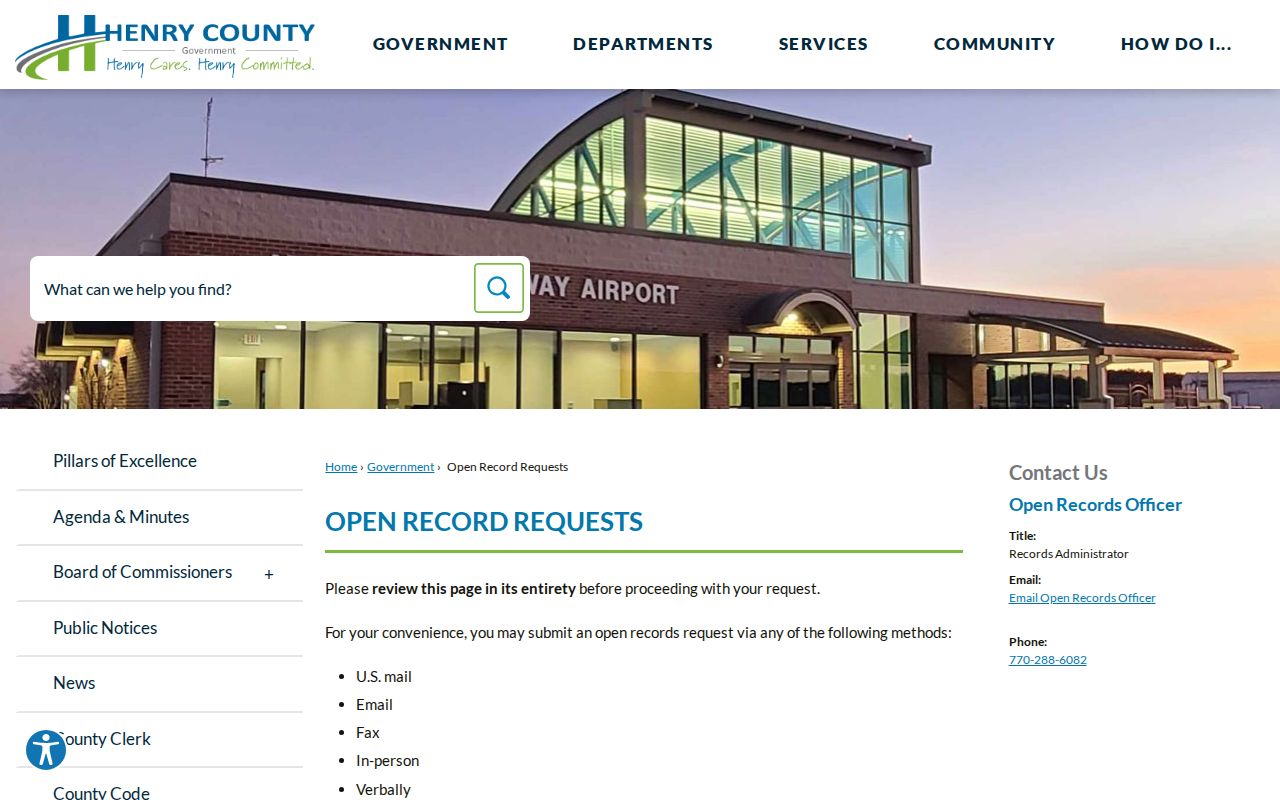
Correct routing preserves the distinction between a police narrative and a court disposition.
Restricted, Sealed & Expunged Records
Georgia uses “record restriction” for limits on eligible GCIC dissemination. It does not destroy every agency file. Pre-July 2013 arrests generally begin with an application to the arresting agency. For later arrests, GBI directs the person to the prosecutor, who decides restriction and reports the disposition through the source chain. Potentially eligible outcomes include release without prosecution, dismissal, nolle prosequi, and certain completed diversion outcomes, subject to exceptions.
Court sealing is a separate petition under O.C.G.A. § 35-3-37(m). File it in the court holding the case and gather the case number, certified disposition, arrest date, agency, OTN, and prosecutor decision. If data remains visible, correct the clerk docket with the clerk, prosecutor data with the prosecutor, GCIC data through GBI, and booking data with its creating agency.
Henry Probation, Parole, and Pardons
The Georgia Department of Community Supervision handles felony probation and parole supervision. The sentencing court file shows the public judgment and revocation litigation, while internal supervision notes may be restricted. A revocation petition concerns an existing sentence and is not a new conviction by itself.
DCS explains Georgia supervision.
Use the clerk for the sentence and DCS for the supervision channel.
A pardon does not erase a conviction. The State Board of Pardons and Paroles says the conviction remains and the pardon becomes part of the history.
Any later restriction petition must meet its own statutory requirements.
First Offender treatment is also distinct. Successful discharge can have sealing effects within GCIC under Georgia law, but it should not be described as destruction of every paper file or online reference. When a public result conflicts with an expected discharge, obtain the signed court order and certified disposition first. The court or prosecutor must support the source correction before GCIC can update repository data.
City-by-City Criminal Records in Henry County
Stockbridge, McDonough, and Locust Grove police create city reports, while HCSO records the county jail booking after transfer. Their municipal courts retain qualifying ordinance and traffic matters. A city address does not automatically make an event a city case, especially in the county seat. Identify the arresting agency and issuing court first.
Stockbridge Record Check
36,331 · Police reports, HCSO bookings, and Municipal Court are separate records.
McDonough Record Check
33,395 · Distinguish city records from county offices with McDonough addresses.
Locust Grove Record Check
14,610 · Reports may take five business days; payment is not a case-history search.
Verify Henry County Bond Requests
HCSO posted a March 2026 warning about scams involving inmate information, bonds, and payment demands. Public jail details can make a false request sound credible. Confirm custody through the official inquiry and verify every payment instruction with HCSO Bonding at 770-288-7120. Do not trust a caller's number, payment-app request, or claim of urgency.
Henry County's government homepage provides an independent verified route to county offices.

Starting from a known government domain reduces the risk of following an imitation records or payment page.