
Criminal Court Cases in Henry County
Henry County Superior Court hears felony prosecutions in the Flint Judicial Circuit. The District Attorney prosecutes those matters, and the Clerk of Superior Court preserves the filed case record. State Court handles misdemeanors and many traffic matters prosecuted by the Solicitor General. Magistrate Court handles warrants and assigned early proceedings, while municipal courts retain qualifying city ordinance and traffic cases. A McDonough, Stockbridge, or Locust Grove citation therefore may never appear in the Superior Court search.
The court, not the jail, is the source for a certified disposition. Henry County public calendars show a Superior Court number in a form such as 2025-SU-CR-703-[judge initials]. The year, court division, criminal designation, sequence number, and judge initials help staff identify the file. Related petitions can use other prefixes, so preserve the number exactly as displayed.
Choose the Right Henry County Court
A search can fail simply because it began with the wrong custodian. Use Superior Court for a filed felony, State Court for a county misdemeanor, and the issuing city court for a municipal citation. Juvenile Court records have separate confidentiality rules. Probate and Magistrate Court serve other defined functions and should not be treated as broad criminal-history repositories.
Superior Court Clerk
1 Courthouse Square, McDonough, GA 30253
770-288-8022
State Court
County misdemeanor and traffic routing
770-288-7800
Magistrate Court
Warrants and assigned preliminary matters
770-288-7700
Henry County Case Record Searches
The Clerk's court-services page links Access Judicial Records Online and Case Management Docket Search. The complete interface, mandatory fields, wildcard rules, login limits, and image charges were not confirmed in the official material. Do not guess. Search broadly enough to find the party, then use the full case number to confirm the file with the Criminal Division.
- Open the clerk's official records link and select the relevant criminal court or docket source.
- Search by the complete case number when known. Otherwise use the party name and compare identifying context.
- Match the filing year, court prefix, party role, and hearing information. Do not select a record from name alone.
- Read the chronological docket and locate the latest disposition or judgment entry, not merely the newest calendar listing.
- Call or visit the Criminal Division for available images and request a plain or certified disposition when proof is needed.
| Field Label | Type | Required | Notes |
|---|---|---|---|
| Party name | Text | Not confirmed | Compare spelling and party role. |
| Case number | Text | Not confirmed | Best key when copied in full. |
| Court / calendar | Display field | No | Identifies division and hearing type. |
| Hearing date | Date/time | No | A schedule is not proof the hearing occurred. |
| Party code / count | Display field | No | May show DF and individual charge counts. |
A Calendar Is Not a Disposition
Official criminal calendars can display the court, calendar type, hearing time, judge, item number, case number, party code, attorney names, offense text, and comments. That is useful routing data. It does not prove the event occurred, reveal every filing, or establish the final outcome. A reset, plea, dismissal, or sentencing order may appear later in the register of actions.
The Henry County Clerk of Superior Court is the reliable next stop when a calendar and docket seem incomplete. Ask for the register of actions, the specific final order, and certification if the document must serve as official proof.
The official court-services source shows where online judicial access begins.
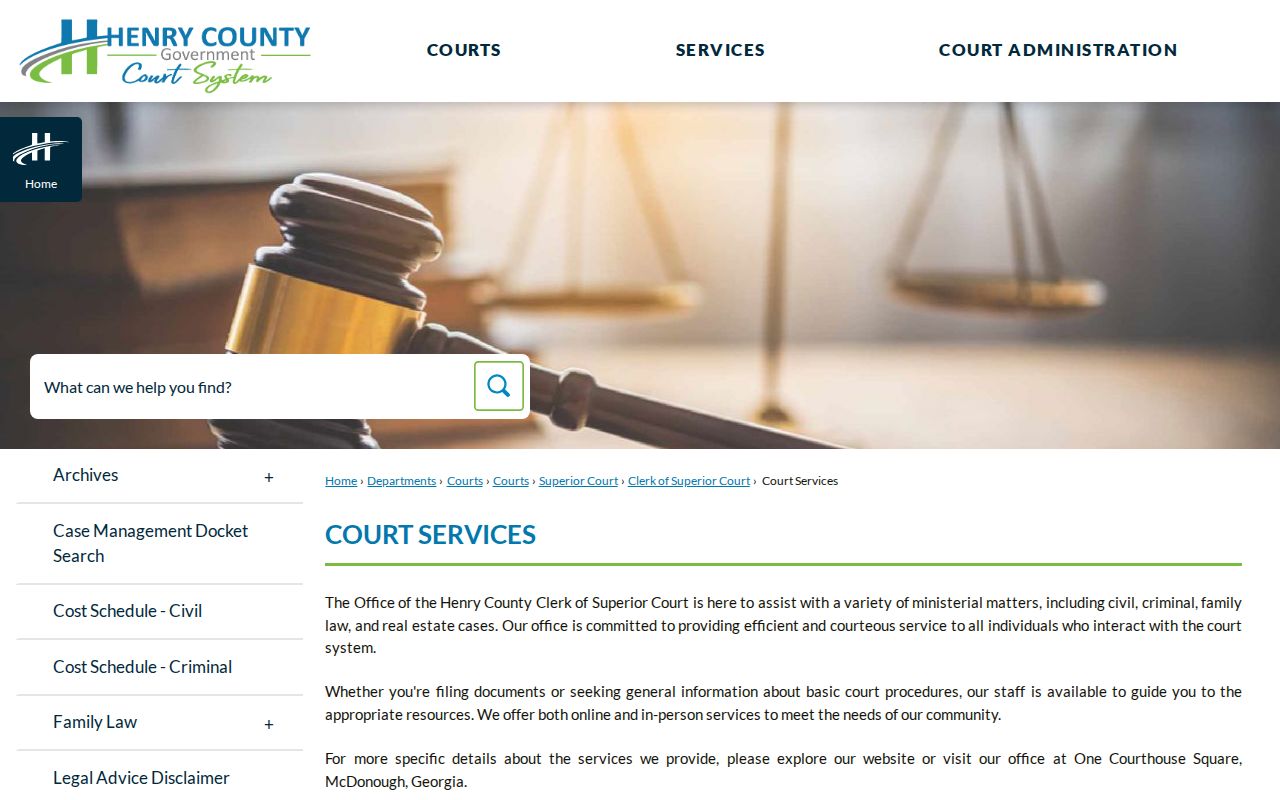
The clerk channel connects the public index to staff-held images, archived material, and certified copies.
What a Criminal Case File Contains
A Henry County court file centers on the filed accusation or indictment, docket events, motions, orders, judgment, and sentence. It differs from a GCIC rap sheet, which links fingerprint-supported arrest cycles to reported dispositions, and from an HCSO booking profile, which focuses on intake, bond, housing, and release. The final signed order is more useful than an intake charge when the goal is to understand the result.
| Case Number & Court | Identifies the file, division, filing year, and assigned court. |
|---|---|
| Charging Document | The accusation or indictment states the charges actually filed. |
| Docket Entries | A dated register of filings, hearings, orders, and case events. |
| Hearing Dates | Scheduled proceedings; verify completion in later entries. |
| Disposition & Judgment | The outcome for each count, including plea, trial result, dismissal, or nolle prosequi. |
| Sentence & Conditions | Custody, probation, fines, restitution, and court-ordered terms when public. |
Read Henry County Outcomes Carefully
Case terms describe different events. They should not be collapsed into a simple guilty or not-guilty label.
- Nolle prosequi
- The prosecutor formally declines to proceed on that charge; it is not a conviction.
- Dismissal
- The charge ends without conviction, but the public record is not automatically restricted.
- Acquittal
- A not-guilty result after adjudication.
- First Offender
- A Georgia sentencing status that may avoid adjudication after successful completion; it is not universal record destruction.
- Revocation petition
- A claim that an existing sentence was violated, not a new conviction by itself.
Criminal Case Stages in Henry County
A criminal matter usually moves from arrest or citation through first appearance and bond, prosecutor review, accusation or grand-jury indictment, arraignment, discovery and motions, plea or trial, judgment, sentence, and possible appeal. No fixed local time can be promised. Custody, charging review, motions, specialty-court participation, and trial scheduling can change the pace.
Case flow: Arrest › Booking › Prosecutor review › Accusation or indictment › Arraignment › Plea or trial › Judgment › Sentencing › Possible appeal
Henry County Specialty Docket Events
Henry County operates Adult Felony Drug Court, Resource Court, Veterans Treatment Court, and DUI/Drug Court programs. Their public dockets may show assessments, review hearings, sanctions, graduation, or termination rather than a conventional straight path to sentence. Those events can explain repeated review dates.
Protected treatment and clinical details should not appear in an ordinary public record. The Court Administration office provides official program context, while the clerk remains the custodian for filed docket entries.
Henry County Court Administration describes the local court system and its services.
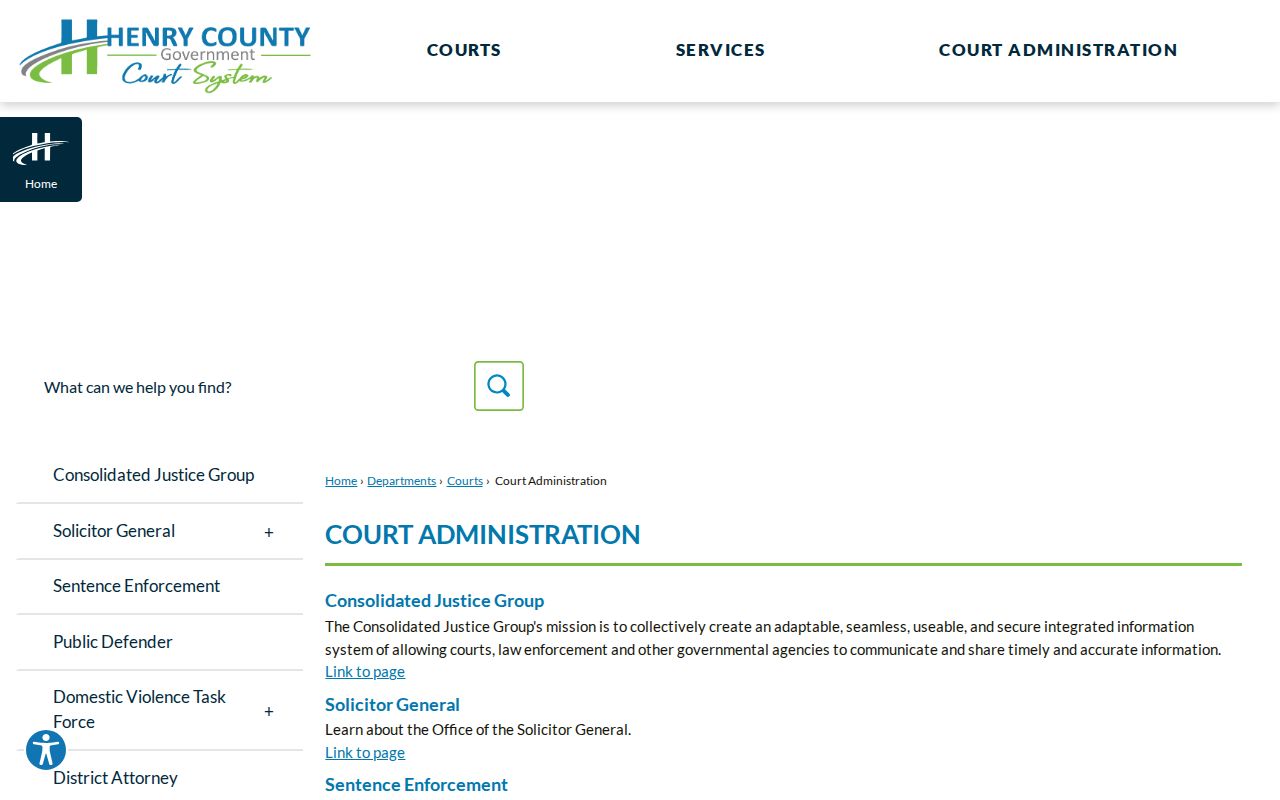
That source helps distinguish court administration from the clerk's separate record-copy function.
Access Rules for Case Records
Georgia law favors access to public records, but the public index is not the whole courthouse file. Juvenile material, sealed cases, victim-identifying details, full birth dates, Social Security numbers, medical information, and security-sensitive content may be closed or redacted. Document images may also require a clerk request, login, or lawful copy charge.
If a known case does not appear, verify the court, spelling, filing year, and full number. Then ask the clerk whether the matter is archived, sealed, indexed under another party form, or held by a municipal court. Record restriction at GCIC and sealing of a clerk file are separate actions under Georgia's restriction law.
Certified and Archived Henry Dispositions
For an older case, begin with the online index, copy the exact case number, and ask the Criminal Division whether the desired order is imaged. Archives may need to retrieve older material. Specify whether a plain copy or a certified copy is required, identify the exact document, and request the current cost before staff begins broad research.
The Superior Court Clerk's official page is the source for court-file service details.
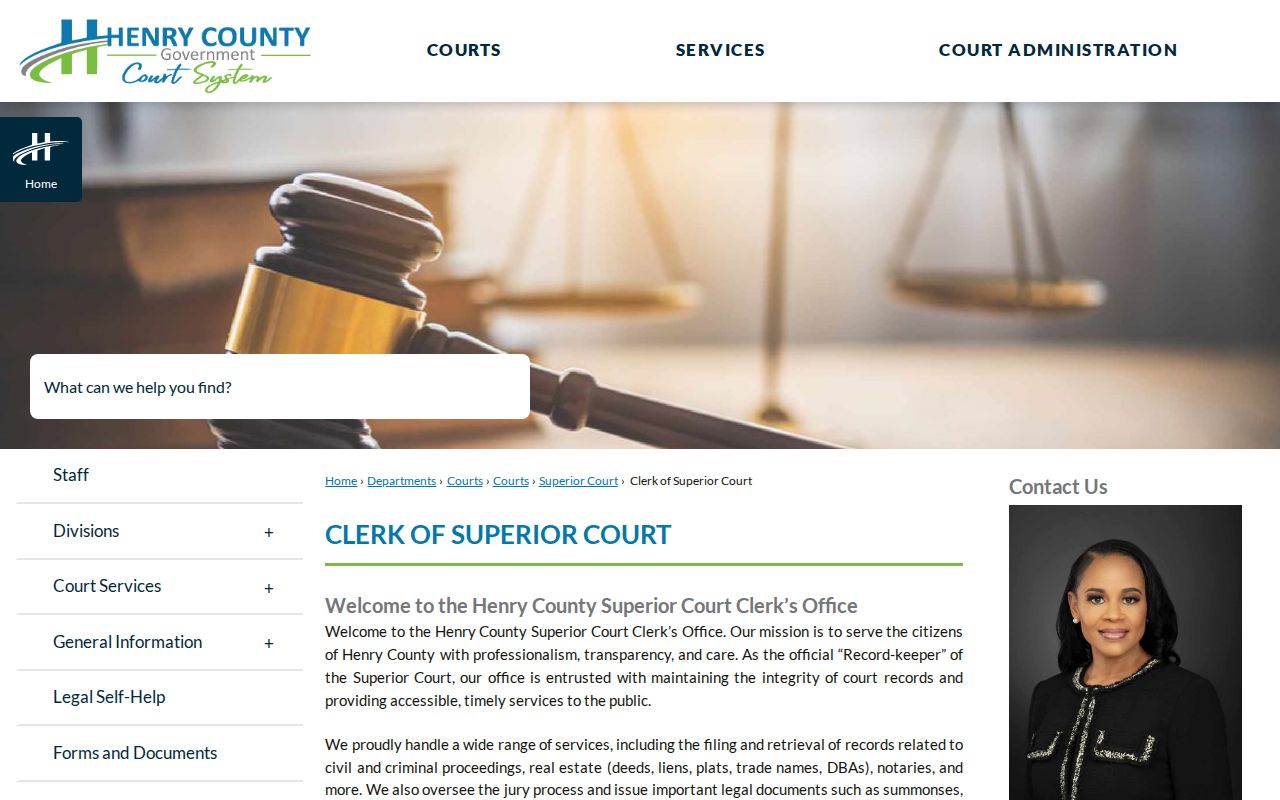
A certified disposition from that custodian is stronger proof of outcome than a booking page or calendar.
Henry County's court structure also helps route a request to the right division.
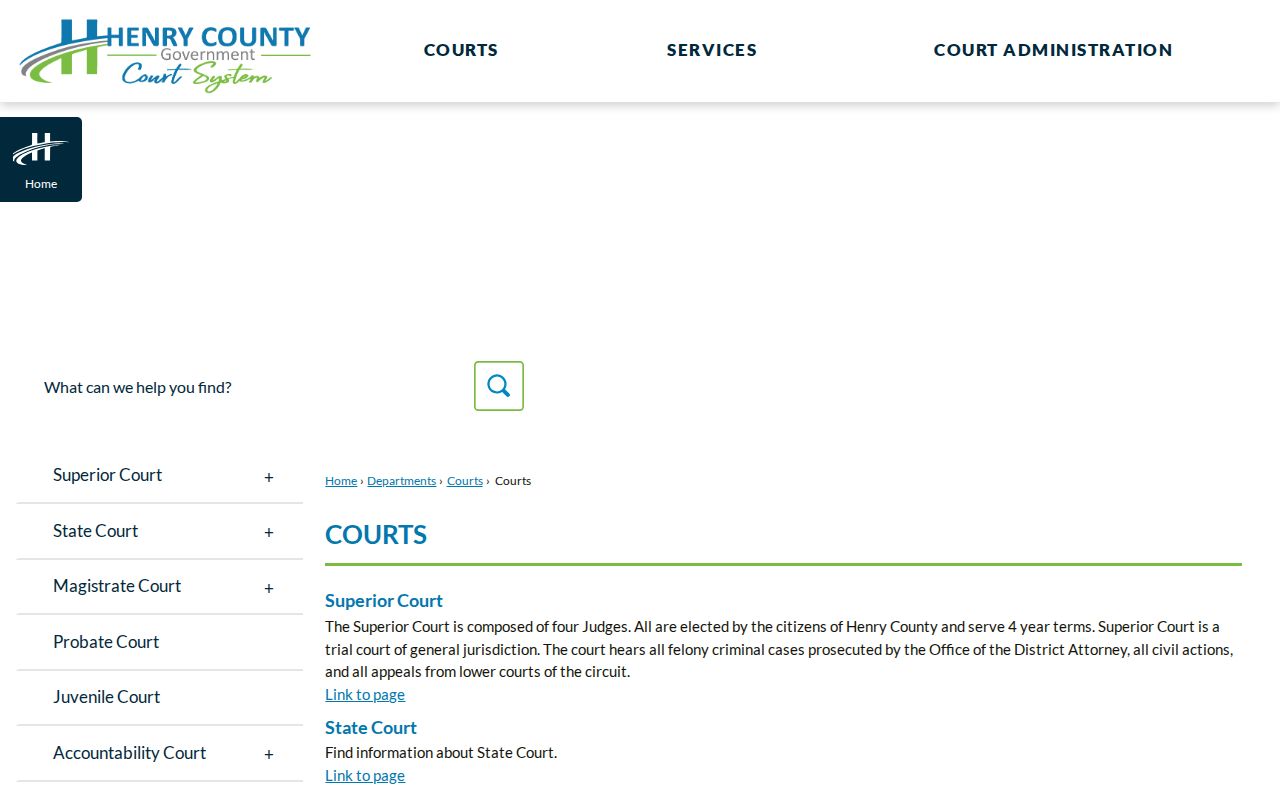
Correct routing prevents a city or State Court record from being mistaken for a missing Superior Court case.
The official criminal cost schedule supplies current court cost context.
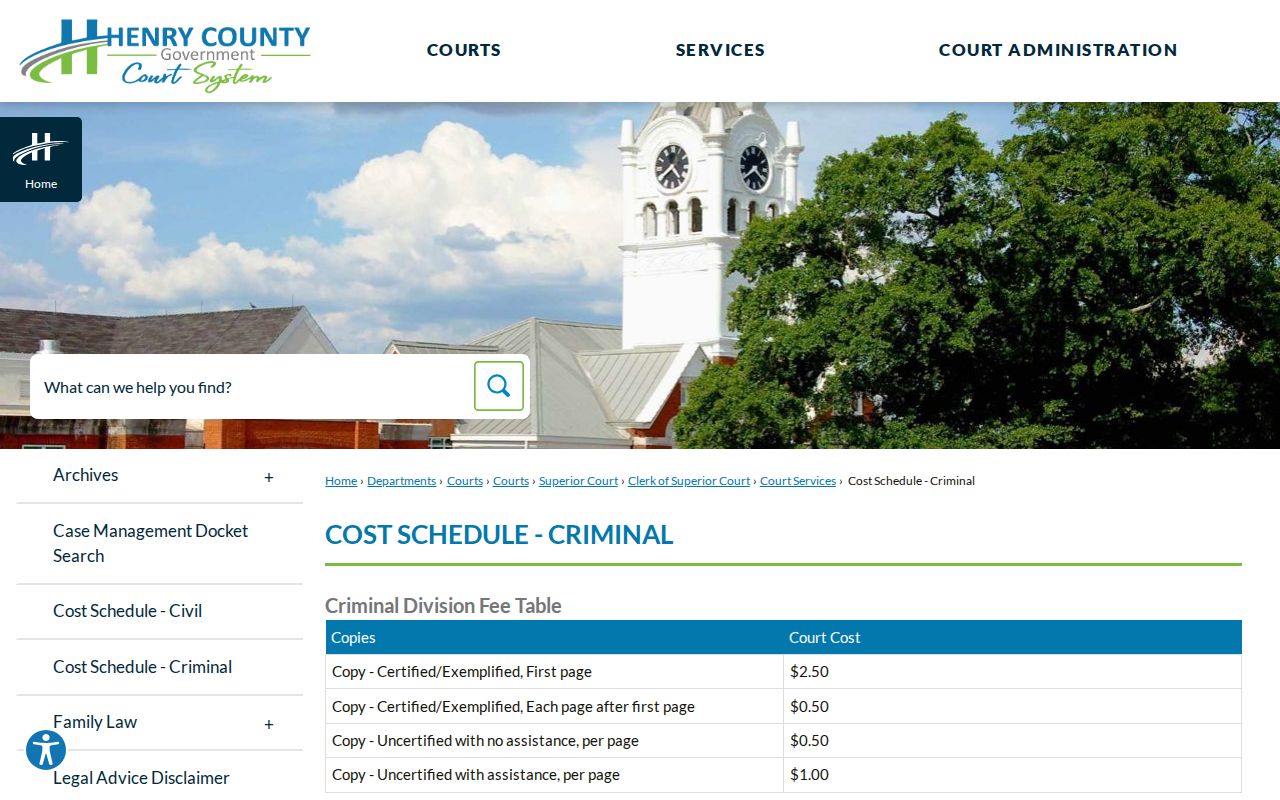
Confirm copy and certification charges with the clerk because a case cost schedule is not necessarily a public-record copy fee list.